I shared the video below on my Instagram a few days ago, describing Selfyontology and mentioning just briefly that one of the reasons this self-study project is coming into fruition now might just be because I’m 37.

Why I’m Noticing My Cornerstone Years
When you look back at your life, can you see your cornerstone years? Your major turns or forks-in-the-road? Like, if your life were an HBO mini-series and the writers had to go back and show your hard stuff, pain, or moments of exposure that really made you who you are now, your decisions that shaped everything after… Can you tell right off which years they’d need to show?
For me, it’s the 7s.
I can backtrack straight to 27 as a huge turning point in my life story, but if I keep going… so was 17. And now that I’m looking for the pattern, I can see it in 7 too.
Age 7: Learning Shame
At age 7, I felt social shame for the first time. That special kind of shame that comes when we learn how to compare ourselves to others or understand their perceptions enough to be hurt by how they see us.

We lived in Providence, Rhode Island, just temporarily. There for a year while my dad was on a job. In our neighborhood, there was another family with two girls close in age to my sister and me, so we played together often. These girls and my sister loved “playing pretend,” and they were good at it. The older girl was especially quick at coming up with complex scenarios and epic backstories, then assigning herself a role to play and looking at each of us expectantly. The little sisters would jump in right away, full of creative confidence. I faltered. Not sure who to be, how to choose, and feeling too awkward to pretend. Even when she sighed, flipped her hair, and made up a persona for me to play… I couldn’t enter in. I messed up the flow. I stuttered, stalled out the game. That was the first time I thought, “I guess I’m not good at playing. Maybe I’m not fun.”
Thoughts like that are either banished right away, kicked out firmly because you know they don’t belong… or they make themselves at home, burrowing into deep places until it feels they’ve always been there. Until they feel true. I avoided playing pretend after that, always coming up with a reason to be busy.

Another time, my mom took my siblings and me to the park for the day to play with some family friends. This family had quite a few boys, ranging in age from younger than my little sister to older than my older brother. Of course, I had a huge crush on one of the middle brothers. No longer can I remember his name, but he seems like a Sam so let’s just call him that. It was a sunny day, we had picnic blankets on the grass, the girls were running around the wooden castles of the playground, the boys were running around in some loud game across the grassy field, and I think I might have been reading. Or swinging.
The youngest brother came up to me shyly, a messenger, and said Sam wanted to talk to me in the field. He pointed to a spot far away across the grass, where I could see Sam standing and holding a small posy of flowers he’d picked. My heartbeat thudded in my ears, my stomach jumped up my throat, my face felt hot, and my hands were shaky. I slowly walked toward him, wondering if this moment could possibly be what I hoped for. Could he like me back? Without realizing, I must have also been experiencing some serious tunnel vision.

I remember seeing nothing else but him – standing in the sun, beams across his freckled face, flowers in his hands. Stopping in front of him, I took a deep breath and said, “Hi.” He trapped me in eye contact, said something I don’t remember now, and held the flowers out to me. I hesitated, daring to hope, reaching my hand out for the flowers… and then felt wads of dry grass hurled at me from three directions, along with jeers and laughs. I have no idea how I didn’t see or hear the other boys sneak up on me, but they did. With armfuls of ammunition they’d pulled and stacked from the tall, dead grasses near the edge of the field… they covered me. Sam laughed too, threw the flowers at me, and ran off with the other boys high-fiving each other about how good they got me.
They left me standing alone in the middle of the field, grass stuck in my hair and itching my neck, feeling so stupid and exposed. How could I have thought he’d really like me? I should have known.

For ten years, “Maybe I’m not fun” and “I should have known” were central themes the rest of my self-concept organized around.
Age 17: Grief, Faith, and Anger
We celebrated my 17th birthday in the hospital, because by that time my Nana wasn’t able to leave. The idea of gathering anyone together away from her felt too awful, and what if she passed away while we were gone? We knew it was likely soon, and I was obsessed with the need to be there with her when it happened.

She’d been diagnosed just a couple of months previous. Amyloidosis. In those two months, the beautiful and warm Nana I’d idolized my whole life was wiped away. Shrinking in some places, swelling in others, her hands bruised and pale lying on the white sheets of the hospital bed. The curly brown hair she’d styled in heat curlers and carefully pinned up every single morning lay mussed and flattened against the sterile-looking pillow cases.
On her bed at home, she always had the softest sheets and pillow cases, usually with some sort of green or turquoise 70’s pattern to them, and the fluffiest white down comforters. Her guest beds were also equipped for maximum comfort, but she usually let us take turns sleeping in bed with her during our weekly sleepovers at her house… so the softness of her king-size bed is the one that lives most clearly in my memory. That, and her turquoise shag carpet under my bare feet. Whenever I feel soft sheets, down comforters, or shag carpet—I feel my Nana.

Smells bring her back to me too. Orange frosted cinnamon rolls have a distinct one, and it wafted through her kitchen almost every time she made us breakfast. I see her at the kitchen counter and I’m back there again, a little kid learning to spread the right amount of frosting on each roll so it’s “fair.” Her standing right behind me, her hands guiding mine.
Whenever I catch the sharp smell of hand sanitizer in the air it immediately squeezes my heart with the scary anticipation of losing her, even all these years later. We had to use it so often those last several weeks. At the end.
I was spending every afternoon and evening at the hospital, giving away shifts at work and sometimes even skipping school. I didn’t care that it was my senior year. Everything that used to feel important faded. The idea of her dying while I was away somewhere else, doing something else, not thinking of her for a moment, tormented me.

She lasted two weeks after my birthday, dying on October 26th of 2005. My whole family was there, she was surrounded by all the loved ones she’d birthed and welcomed and nurtured, singing her favorite songs and speaking words of love. At the moment she actually passed, I was out in the hall answering a text, trying to be respectful of the sanctuary of her dying place. When I came back in and realized, I was gutted.
This was my first close experience of death. I started questioning everything that had previously structured my life, grew jaded, decided not to go to college, quit going to church, and generally floundered. My family was grieving too and wasn’t as observant during that season. I drifted in an existential haze, hurting alone and unnoticed.
Then I fell in love for the first time, with someone who witnessed my pain and questioning and didn’t flinch away or try to distract me. Just accepted it all, and wanted to spend time with me anyways. At that time though, my Christian faith and strict morals around dating ruled over my heart. He wasn’t a Christian and so it was over before it even began; and I blamed God for my heartbreak. It was the first time I was angry enough with God, I wished I could quit him. Angry with my parents for raising me with beliefs too strong to ignore. Angry with myself for not being able to tune it all out and make my own choices.

At the time, the narrative I survived with was that my faith was too strong to let me go. Even though it felt like a curse, my “wiser” self could see it was more truly a blessing. I might be tortured and in pain, separate from everything I wanted, a “normal life” with regular friendships and fun and maybe even a boyfriend, but my unshakable faith was keeping me pure, safe, and well. Protecting me for some important future. It was a blessing, it just had to be, I knew it.
(Now, I’d call it religious anxiety, almost to the point of obsessive-compulsive behavior.)
Seventeen was the first year I ever wanted to break out of the structures I’d grown up inside. But I didn’t even make it through the door. I let the boy go, went back to church, and applied to a private Christian college.
The next decade, I would build a whole life inside these psycho-religious walls, but spend longer and longer staring out the windows wondering with deep longing what else might be out there.
Age 27: Surviving the Break
Married, a mom, and working as both an employee of and a leader in our church, the house was slowly deteriorating around me. One long-held belief at a time sifted away into the wind. The increasing dissonance brought anxiety and panic attacks. I couldn’t eat or sleep, lost 40lbs in too short a time, and thought daily about ending my life. I took my meds and went to therapy and chain-smoked cigarettes in the dark while crying and writing my pain into poems. One week at a time, I stayed.

Finally, I came to a place where the one belief left in me was this: whatever or whomever God is… I am already loved and worthy and enough as I am. Because I am. No self-sacrifice or walking a hundred miles on my knees through the desert, trying to be good. No self-flagellation or earning my way into a better story, a “someday” that might be worth it all.
I left my husband and then the church too. Divorced and deconstructed, but not dead. This was the hardest, sharpest year of my life.
(I’ve written more extensively about this season on @nightpoetic and @writingformy_ on Instagram. If you think those stories might resonate with you, you can find them there.)

The anxiety was gone, but the depression and the pain stayed. And guilt came to join them. Loneliness too, as I realized how many of my friendships were conditional, based on a certain, limited version of me and not available to the version I was becoming. Then came learning to survive days without my daughter, while she was with her dad. I realized that the days I could get out of bed were the days I had plans to connect with someone – a coffee date, a walk, a hiking trip. Human connection and real conversations, preferably one-on-one, were a fuel for my soul that still lit, even on the darkest days.

Newly debt-free and ready for a change, I went back to school and decided to become a school counselor—something I knew I could get out of bed for, no matter how dark and heavy my mind. Best choice ever. My 27th year set me on the path towards a life I truly love, and I’m so glad I kept going. So grateful I stayed and got to experience everything that came next.
Year by year, light and joy became more consistent. I made my mind into a place I like to be. My body became my home, my life the garden around it.
Age 37: Something’s Coming
Now I’m 37, and I feel an itch. I’m a wife again, a mom of two now, working full-time in a career I love. I’m in a life I enjoy. In no way do I think I’ve “arrived” or anything, but it does feel like I’m standing on a relatively firm, level foundation, ready for the next thing. Something is coming. What will it be?

Maybe it’s a straight up psychosocial development thing. Erikson says what’s coming for me next is a wrestling match between generativity and stagnation, so maybe I’m coming to the middle age developmental crisis a little early. More and more lately, I’m thinking about what the rest of my life story might be. What will the second half look like? In what way will my 37th year shape how the rest unfolds? I feel something coming for me, and I don’t want to just wait around. I want to prepare, to work towards harmony within me, so that I can bring to whatever’s next the best version of the only unique thing I carry in the world—my Self.
I want to meet whatever comes next clarified. And not just meet it, but seek it, find it, and discern what to do next with confidence. Thirty-seven will be the next cornerstone year for me, and Selfyontology is a huge part of why and how. This is my season for digging deep, for intentional self-study and sifting.
Is it yours too? It would be really cool to have your company this next year.
Either way, thank you for reading this far and for being part of an effort and a conversation that will make this next year significant—hopefully for both of us.
What are your cornerstone years?
How do you know? And when’s the next one coming?






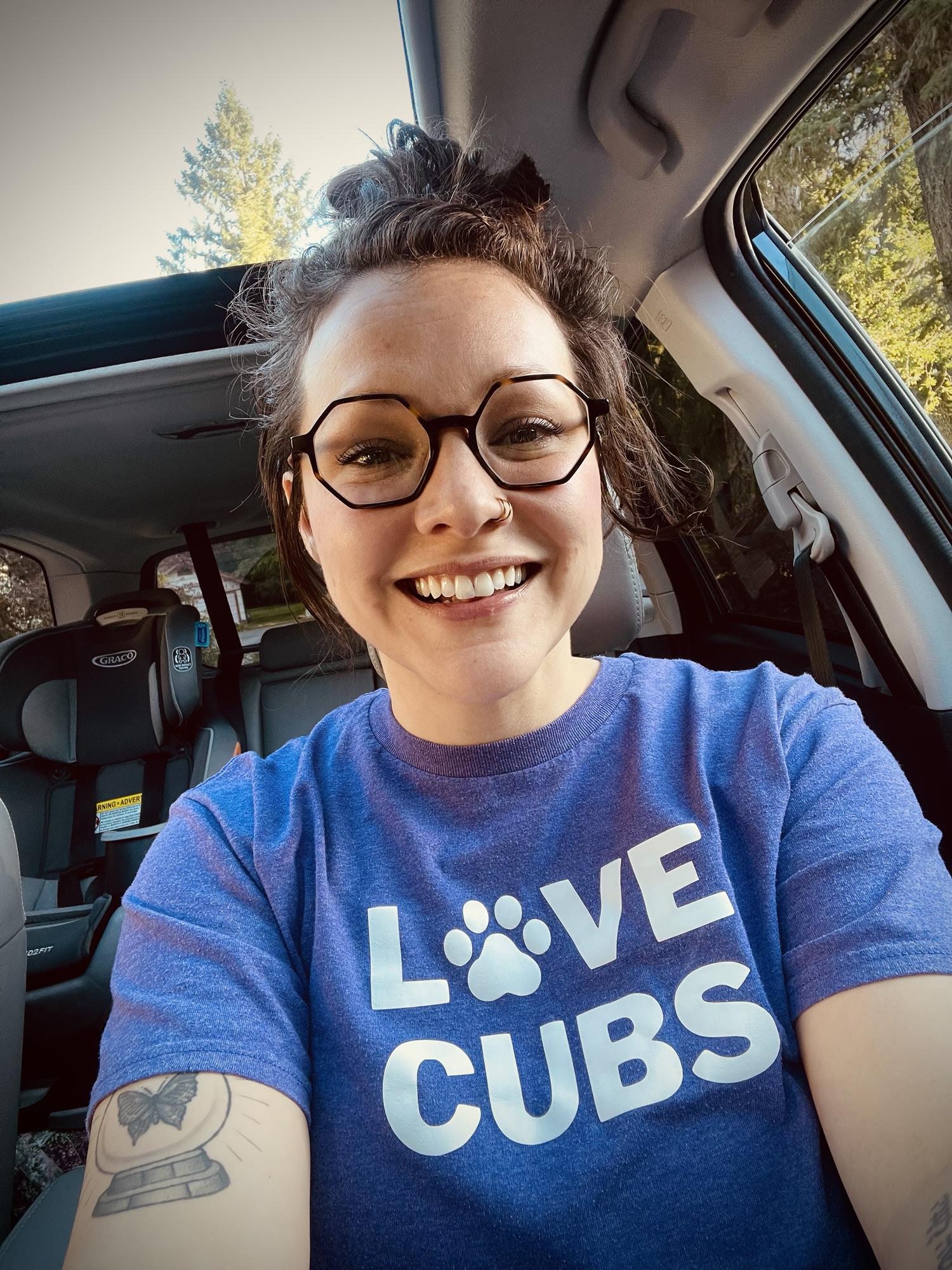


Talk to me 💜